
Living Authentically as a Neurodivergent Parent

The challenges and joys of Neurodivergent parenting, including what you want your child to learn about self-acceptance.
Parenting is messy, beautiful, exhausting and life-changing for anyone. Add in being AuDHD, and the experience carries both challenges and joys that can feel amplified in every direction. It’s not just about raising a child, it’s also about raising myself, in a way. Learning how to show up authentically, how to regulate, how to embrace imperfection and how to hold both guilt and love at the same time.
I’ve always loved repetition, but with a toddler, that love is tested. The same book on repeat, the same game over and over, the same request said ten different ways, sometimes it’s comforting, sometimes it’s overwhelming. Motherhood is overstimulating for most people, but when you add sensory sensitivities and emotional dysregulation into the mix, the load can feel heavy, even unbearable at times. And yet, it’s in those raw moments that I learn the most about myself and about the kind of parent I want to be.

Learning to Parent as a Team
I don’t parent alone. Having a partner who understands me, who sees when I’m reaching my limit and steps in, is something I’m deeply grateful for. My fiancé and I work as a team; tagging in and out, reading each other’s cues and trying to stay aligned even when the day feels chaotic. Fresh faces bring fresh energy, and when Milo gets time with his dad while I reset, everyone benefits.
For a long time, I carried guilt when I needed a break. I told myself good mums don’t step away, don’t swap out, don’t ask for help. But the truth is, good mums do. Especially neurodivergent ones who know that ignoring their own needs only leads to a bigger crash later.
I’ve been learning, slowly and sometimes painfully, that putting my needs first isn’t selfish. If I am regulated; sensory, emotionally and in my nervous system, I parent better. I can co-regulate with Milo instead of spiraling alongside him. It’s taken years to realise that regulation is not a luxury for me; it’s essential. And when I invest in it, I’m giving him the best version of me I can.
The Hard Days
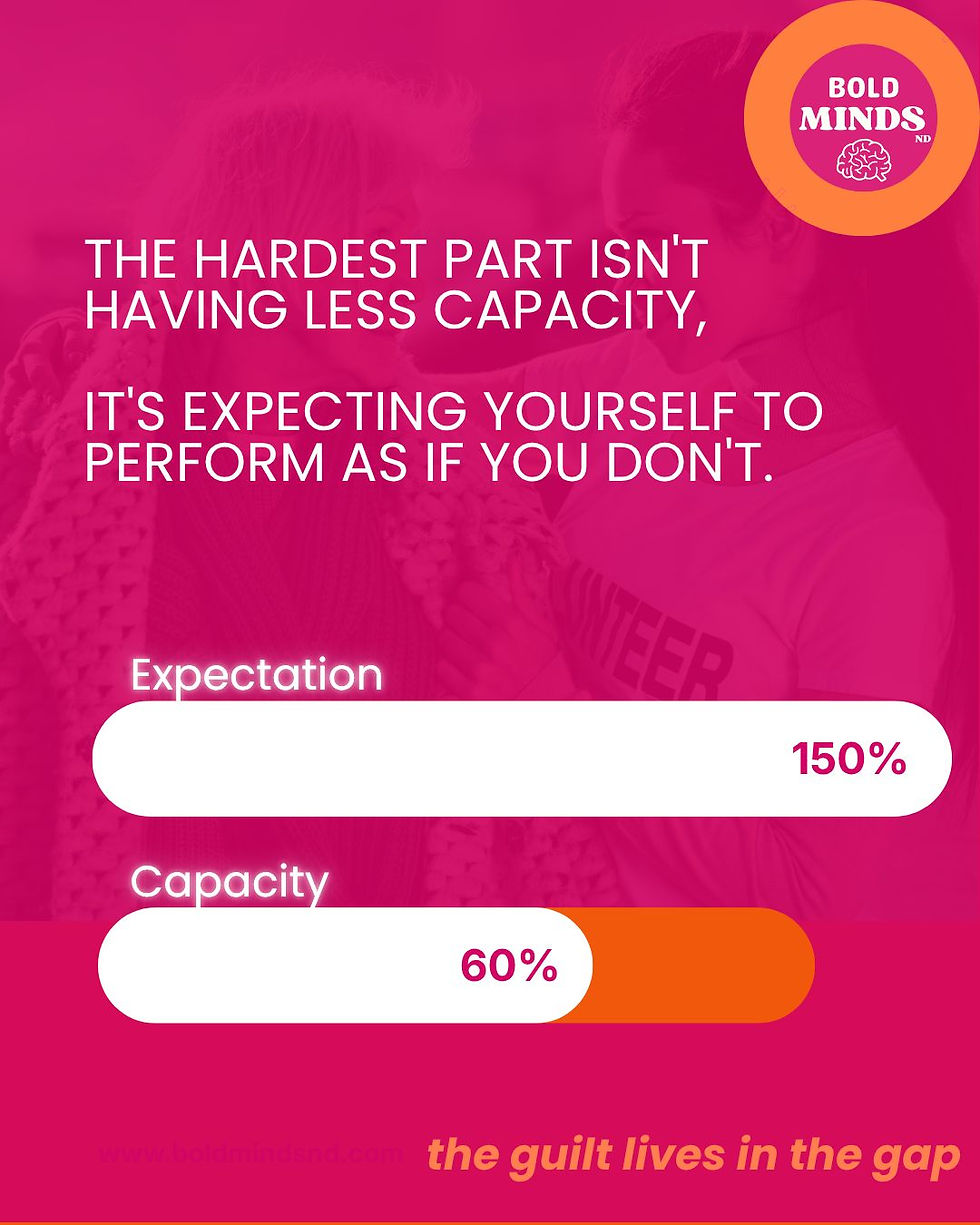
Still, I won’t sugar-coat it: there are days when it feels like too much. The days where Milo has seen me cry, shut down or snap when the noise, the mess, and the demands pile up beyond what I can hold. Those moments hit with a guilt so sharp it almost hurts physically.
“Mum guilt” is common, but for me, being neurodivergent makes it louder, heavier, relentless. It’s not just a voice whispering that I’m not doing enough. It’s a siren telling me I’m failing him because of who I am.
On those days, I notice myself overcompensating. I’ll push myself into areas of parenting that I find draining, like big social groups or crowded play spaces, because I worry that if I avoid them, Milo will miss out. I’ll go out of my way to create “perfect” experiences because I feel like I’m lacking in the basics. Even food carries this weight, my own eating is repetitive and not always varied and I catch myself worrying that I’m not providing the same variety other parents do.
But here’s the truth I remind myself of, again and again: Milo doesn’t need a perfect parent. He needs a parent who shows up with love. Children thrive when they feel safe, secure and seen; not when every box on the “ideal parent” checklist is ticked. Authenticity, even in its messy moments, matters more than perfection.

The Joys
Parenthood hasn’t only exposed my struggles; it’s also reawakened parts of me I’d buried. Milo has reconnected me with creativity in a way nothing else has. I find joy in crafting activities with him, but also in creating things for him when I’m on my own, whether it’s making sensory play setups, little crafts, or personalised touches that show him how loved he is.
In those creative moments, I feel more grounded. I feel like I’m both expressing myself and building connection with him. It’s proof that my neurodivergent brain, with its passions and deep dives, isn’t just a challenge in parenting, it’s a gift.
Being a late-diagnosed AuDHD mum has made me fiercely determined that Milo grows up knowing he is valid and loved exactly as he is. That he doesn’t have to earn acceptance by changing who he is. That how he thinks, moves, communicates and experiences the world are not things to hide, but things to honour.
Strategies and Tools That Help
Parenting while neurodivergent means I’ve had to get intentional about regulation, for me and for Milo. Over time, I’ve built little strategies that help us both find balance.
Loop earplugs: I wear these often to soften the sound around me. They help me stay present without tipping into sensory overload.
Allocated “lay-in” mornings: At weekends, my fiancé takes over first thing so I can have quiet time in bed. I don’t usually sleep, but the space to just be, without demands, is essential. We then swap the next day!
Breathing and mindful pauses: Sometimes the most powerful thing I do is stop, breathe deeply, and ask: what does he need? What do I need? Those small resets help me parent with intention, not reaction.
Arts and crafts: As much as possible, I bring creativity into our time together. It’s calming for me and engaging for Milo, a shared space where we can connect.
Thinking like him: I try to step into his world, pausing to notice ladybirds on walls, pointing out colourful houses or stopping in awe at something small. It grounds both of us in the present moment.
Modelling quiet: We often stop, gasp and say “listen.” Sometimes it’s just silence. Sometimes it’s birdsong or wind. These pauses anchor us, and they show Milo that calm is something we can choose together. He now does this on his own, and sometimes this can be the most welcomed gift ✨
Sensory input: Playdoh, karate chopping pillows, jumping on trampolines, tight squeezes and tickle; all of these give us shared joy and regulation. Movement and pressure calm our bodies when words alone can’t.
Screen time with connection: Yes, we watch TV. Sometimes it’s survival, but often it’s connection; cuddled up, commenting together on what we see. For me, those still, snuggly moments aren’t just about the show; they’re about meeting my own need for closeness.
These aren’t perfect systems. They don’t erase the hard days. But they give us rhythms that help me parent with more capacity and show Milo that regulation and self-care are part of life, not something to be ashamed of.
The Weight I Carry
If there’s a part of parenting that makes my chest ache, it’s this: knowing that the world isn’t built for him. The education system, the workplace and society at large are still structured in ways that exclude and marginalise neurodivergent people. I’ve lived (and still live) it myself and the thought of him facing the same barriers makes a huge wave of emotion rise in me, an emotion I often can’t label (alexithymia has its way of blurring the lines).
The weight of wanting to protect him from all of it is immense. I wish I could change the entire world for him, make it safer, kinder, more inclusive. And in many ways, that longing fuels me. It drives the work I do, the services I’m building and the way I show up for him every day. But it’s also heavy. It’s a constant reminder that parenting isn’t just about the now, it’s also about preparing him for a future that I can’t fully control.

Living Authentically, Together
At the heart of it all, my biggest hope is that Milo grows up knowing this: you don’t need to hide who you are to be loved. You don’t need to mask to belong. You are enough, exactly as you are.
And that means I have to model the same for him. Even when it feels messy. Even when I get it wrong. Even when mum guilt screams at me. Because living authentically as a neurodivergent parent isn’t about being flawless, it’s about showing him what it looks like to be real, to recover after hard days, and to keep trying with love.
So I keep showing up. Some days with energy and creativity spilling over. Other days with tears, overstimulation and apologies. But always with love. Always with determination.
Because at the end of the day, living authentically as a neurodivergent parent means embracing the whole picture: the struggles, the guilt, the immense joy and the relentless drive to raise a child who knows they are valid, always.
✨ Parenting while AuDHD is both my greatest challenge and my greatest gift. It pushes me to confront my own limits, but it also fuels my deepest hope, that my child grows up in a world where authenticity is not just allowed, but celebrated.


Comments